Rodent Control & Removal
Humane Rodent Control, Exclusion & Cleanup Since 1963
Contact Us for
Rodent Control
Rodent Removal & Exclusion Services
Dixie Exterminators provides complete rodent control across Marietta and Metro Atlanta. Our process combines targeted trapping, sanitation, and permanent rodent proofing to keep rats and mice out of your home for good.
Since 1963, local families have trusted Dixie to protect attics, crawl spaces, garages, and living areas from Norway rats, roof rats, and house mice. We don’t just put out bait and hope for the best—we identify how rodents get in, remove the infestation, and seal every entry point we find.
Rodent Problems in Marietta & Metro Atlanta
Metro Atlanta’s mix of older homes, wooded lots, and expanding neighborhoods creates ideal conditions for rats and mice. Rodents follow tree lines, fence rows, and utility lines to reach roofs, soffits, crawl spaces, and garages.
Construction, new development, and changing weather patterns often push rodents out of natural habitats and into neighborhoods. Even clean homes can experience issues when small gaps, unsecured trash, bird feeders, or outdoor pet food provide easy access and food sources.
Our rodent control programs are designed specifically for Metro Atlanta structures and climate, focusing on long-term exclusion instead of temporary population knock-down.
Integrated Rodent Inspection & Removal
Effective rodent control requires more than a few traps. Our Integrated Rodent Management approach combines inspection, removal, exclusion, and follow-up monitoring.
- Detailed inspection of attics, crawl spaces, garages, and rooflines
- Identification of species (Norway rats, roof rats, house mice) and activity patterns
- Strategic placement of traps and, when appropriate, locked bait stations
- Professional-grade sealing of access points using chew-resistant materials
- Ongoing monitoring and re-inspection to confirm your home stays rodent-free
Rodent Proofing & Exterior Exclusion
Rodent proofing is the cornerstone of long-term rodent control. Once active rodents are removed, we focus on closing every opening they used—or could use—to get inside.
- Seal gaps around plumbing, HVAC lines, and utility penetrations
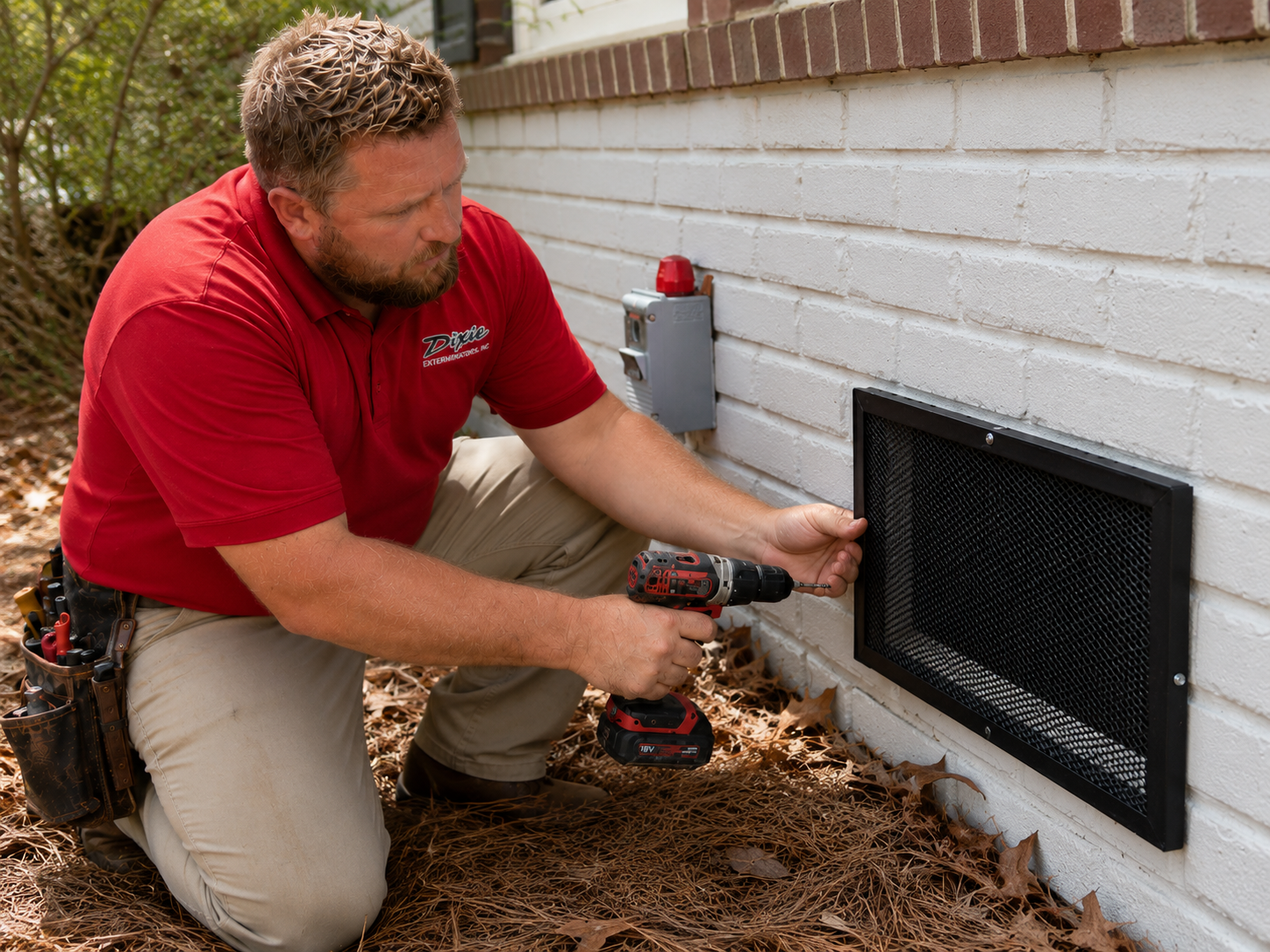
- Screen and reinforce roof vents, gable vents, and crawl space vents
- Repair or upgrade door sweeps and garage door corners
- Patch foundation cracks and other structural gaps
- Install guards on pipes and wires to prevent climbing access
We use sheet metal, galvanized wire mesh, steel wool, concrete patch, brick and mortar, and industrial sealants so rodents cannot chew their way back in.
Detailed Rodent Work Around Your Home
Our wildlife and rodent technicians look beyond obvious gaps to address all the places rats and mice hide or travel.
Attics & Insulation: We inspect for nests, tunneling, and droppings, then recommend cleanup and insulation replacement when contamination is heavy.
Crawl Spaces: Vents, access doors, and sill plates are checked and reinforced to stop rodents from entering at ground level.
Garages & Storage Areas: We inspect garage corners, door seals, and stored items that provide food and shelter.
Rooflines & Eaves: Rodent entry points along fascia boards, soffit intersections, and roof returns are identified and sealed.
Yards & Perimeter: We note wood piles, dense vegetation, and clutter that can harbor rodents and recommend practical improvements.
Every visit includes clear communication and documentation so you know exactly what we found, what we fixed, and how to prevent future issues.
Common Signs of Rodent Activity
Many Metro Atlanta homeowners first discover a rodent problem through noise or droppings. Watch for:
- Droppings: Along baseboards, in cabinets, or near stored food
- Scratching or scurrying: Especially at night in walls, ceilings, or attics
- Gnaw marks: On wiring, wood, pipes, or plastic storage bins
- Grease rubs: Dark, greasy streaks along frequently traveled paths
- Nests: Shredded insulation, paper, or fabric in hidden areas
- Odors: A musky or ammonia-like smell from urine and droppings
If you notice any of these signs, a professional rodent inspection helps catch the problem early—before damage and contamination get worse.
Beyond Rodent Control: Cleanup & Prevention
Rodent control is more than getting rid of rats and mice—it’s about restoring your home and preventing future infestations.
- Sanitation & Cleanup: Removal of droppings and contaminated materials to reduce odors and health risks.
- Insulation Replacement: Replacement of heavily contaminated attic insulation with clean, energy-efficient materials.
- Exterior Recommendations: Advice on trash storage, pet food, bird feeders, and landscaping to reduce attractants.
- Preventive Maintenance: Optional follow-up inspections and touch-up exclusion to keep rodents out long-term.
Many homeowners combine rodent control with general pest control and wildlife exclusion for complete home protection.
Why Metro Atlanta Families Choose Dixie Exterminators
Local Since 1963: We’ve been protecting homes in Marietta and Metro Atlanta for more than six decades. Rodent pressure here is unique—and we know how to handle it.
Wildlife & Rodent Specialists: Our technicians are trained in both pest control and wildlife exclusion, combining construction knowledge and biology to solve tough rodent problems.
Permanent Exclusion Focus: We don’t just treat symptoms; we fix the structure so rodents can’t return through the same openings.
Honest, Humane Service: Our methods follow Georgia Department of Agriculture guidelines and emphasize humane trapping and responsible product use.
Guaranteed Support: If rodents return through a sealed area during your warranty period, we’ll come back to make it right.
Addressing Common Rodent Control Concerns
"My house is clean—how do I have rodents?"
Even spotless homes can get rats or mice. Rodents are driven by warmth, food, and shelter and can squeeze through gaps as small as one-quarter inch. Structural access—not cleanliness—is usually the main issue.
"Can I just put out traps or poison?"
DIY traps may catch a few rodents but rarely address nests, hidden activity, or entry points. Without exclusion, new rodents simply replace the old ones.
"Are your methods safe for kids and pets?"
We prioritize non-chemical exclusion and trapping and use locked, tamper-resistant stations when bait is necessary. Everything is applied according to label and Georgia regulations.
"Will they just come back?"
Our goal is to stop re-entry. By combining removal, structural repairs, and sanitation recommendations, we dramatically reduce the chance of future infestations.
Our Metro Atlanta Rodent Service Process
1. Inspection: We inspect the entire structure—attics, crawl spaces, rooflines, garages, and exterior perimeter—to identify species, nesting areas, and all access points.
2. Removal: We deploy targeted trapping and, when appropriate, bait stations to eliminate active rodents while protecting your family and pets.
3. Exclusion: After confirming activity is under control, we seal gaps, reinforce vents, and install guards so rodents cannot re-enter through old routes.
4. Cleanup & Follow-Up: We recommend and perform sanitation and insulation replacement when needed, then schedule follow-up visits to verify your home stays rodent-free.
Rodent Control for
Marietta & Metro Atlanta
Dixie Exterminators provides rodent control and removal services across Metro Atlanta, including:
Core Areas: Marietta • Atlanta • Smyrna • Vinings • Powder Springs
Northwest & North Metro: Acworth • Kennesaw • Woodstock • Canton • Holly Springs • Alpharetta • Roswell • Johns Creek • Cumming
West & East Metro: Dallas • Hiram • Austell • Mableton • Sandy Springs and surrounding communities
Wherever you are in Metro Atlanta, our team can inspect your home, remove rodents, and design an exclusion plan that keeps them from coming back.
Ready to Get Rodents Out of Your Home?
Don’t wait until scratching in the walls turns into damage in your wiring, insulation, or stored belongings. A professional rodent control and exclusion plan can protect your home and your health.
Since 1963, Dixie Exterminators has helped Metro Atlanta families solve rat and mouse problems with honest recommendations and long-lasting repairs.
Your home. Our commitment. A legacy of protection since 1963.
Call (770) 424-1300 or request service online today for professional rodent control and removal in Metro Atlanta.
Rodent Removal & Control
Questions & Answers
1. What is rodent proofing and why is it important?
Rodent proofing is the process of sealing all current and potential openings that rats and mice use to enter a home. It is the cornerstone of a complete rodent control program. Without exclusion, new rodents will continue to invade even after removal. Dixie Exterminators uses durable, chew-resistant materials such as sheet metal, galvanized wire mesh, steel wool, concrete, and brick and mortar to seal entry points permanently. Proper exclusion keeps rodents from returning and protects your property year-round.
2. How small of an opening can rodents use to get inside?
Mice can squeeze through spaces as small as one-quarter inch—about the size of a dime—while rats can fit through openings roughly the size of a quarter. Because they flatten their bodies and chew through weak materials, even minor gaps can become full access points.
3. What types of rodents invade homes in Georgia?
Three main species cause infestations in Metro Atlanta:
Norway Rats (Rattus norvegicus): Large, burrowing rodents that enter through foundations and ground-level cracks.
Roof Rats (Rattus rattus): Agile climbers that nest in attics and soffits and often reach homes via trees or power lines.
House Mice (Mus musculus): Small, adaptable, and active year-round, they invade pantries, garages, and wall voids.
Identifying the species correctly is vital because treatment and exclusion strategies vary.
4. What are signs that I have a rodent problem?
Rodent infestations are often first detected by:
• Droppings along walls or in cabinets
• Scratching or scurrying noises at night
• Gnaw marks on wires or baseboards
• Greasy rub marks along walls
• Nests made of shredded insulation or paper
• A musky odor or visible damage to stored food
If you see these signs, schedule a professional inspection immediately before damage worsens.
5. How do rodents get into my home?
Rodents use small vulnerabilities to enter homes, such as gaps around plumbing or HVAC lines, roof vents, gable vents, soffit intersections, foundation cracks, crawl space vents, spaces beneath doors or garage corners, and openings around windows and utility pipes.
6. What damage do rodents cause?
Rodents chew constantly to wear down their teeth, leading to serious property damage. They gnaw on insulation, wood, PVC pipes, and even electrical wiring—contributing to residential fires labeled “unknown electrical cause.” They also contaminate insulation and food surfaces with droppings and urine, creating sanitation hazards and foul odors.
7. Are rodents dangerous to my health?
Yes. Rodents carry more than 35 diseases, including salmonellosis, leptospirosis, hantavirus, and rat-bite fever. Their droppings and urine contaminate air and surfaces, potentially triggering allergies or asthma. They also transport fleas and ticks that spread secondary illnesses. Prompt removal and decontamination protect your family’s health.
8. Why do rodents invade homes in Metro Atlanta?
Rodents seek warmth, food, and shelter, especially during colder months or heavy rain. Rapid development in the Atlanta area has displaced natural habitats, driving rats and mice toward residential neighborhoods. Unsecured trash, outdoor pet food, bird feeders, and cluttered yards provide easy food sources and nesting areas.
9. What’s the difference between rats and mice?
Rats are larger, typically 7–10 inches long with thick bodies, blunt noses, and smaller ears. Mice are smaller, about 2–4 inches long, with pointed noses and large ears. Rat droppings are about three-quarters of an inch long, while mouse droppings are roughly one-quarter inch. Both species require professional control because they reproduce quickly and damage property.
10. What does a professional rodent inspection include?
A Dixie inspection covers the entire structure inside and out. Technicians check attics, crawl spaces, vents, and foundations for gnaw marks, droppings, and nesting materials. We examine utility penetrations, floor drains, door sweeps, and screen fits. We also identify food and water sources and provide recommendations for sanitation and exclusion improvements.
11. How does Dixie Exterminators remove rodents?
Our process involves three integrated steps:
1. Inspection: Identify the species, locate nesting and feeding areas, and map all access points.
2. Removal: Use targeted trapping or baiting methods specific to the infestation while maintaining safety for people and pets.
3. Exclusion: Permanently seal all vulnerabilities using professional-grade materials.
This approach eliminates active rodents and ensures lasting protection against re-entry.
12. When do you seal entry points during rodent removal?
We always complete trapping and removal first to ensure no rodents are sealed inside walls or attics. Once the population is eliminated, technicians seal every confirmed and potential opening. This two-phase method prevents odors, secondary infestations, and costly structural issues.
13. What materials do you use for rodent exclusion?
We rely on heavy-duty, rodent-resistant materials such as sheet metal, galvanized mesh, steel wool, concrete patch, brick and mortar, and industrial sealants. For pipes and wires, we install metal guards or barriers to prevent climbing and gnawing. Each repair is chosen for durability against Georgia’s climate and rodent pressure.
14. Can rodents climb pipes and wires?
Yes. Rats and mice are agile climbers that can scale vertical pipes, electrical conduits, and even siding textures. Dixie installs specialized metal guards and disk barriers on exterior lines to block these routes and prevent roof-level access.
15. How long does the rodent removal process take?
Timelines vary based on severity. Minor cases can be resolved within a few days, while heavy infestations may require several weeks for full trapping, removal, and sealing. After completion, we schedule follow-up visits to ensure your property remains rodent-free and that seals hold under pressure.
16. Will rodents come back after removal?
When exclusion is properly done, rodents cannot re-enter through sealed areas. However, new infestations can occur if new openings appear or if food and water sources remain accessible. Dixie offers ongoing monitoring and service warranties to ensure continued protection.
17. Can I handle rodent removal myself?
DIY traps and poisons rarely solve the problem long-term. They may eliminate a few rodents but fail to address nests or entry points. Sealing holes prematurely can trap rodents inside walls, causing odor and decay. Professional rodent control ensures total removal, safe cleanup, and permanent exclusion.
18. What do you do if you catch a live rat or mouse?
If you catch a rodent alive, never handle it directly. Use gloves and a sturdy container to avoid bites or contamination. Release should only occur in accordance with local wildlife regulations. Dixie’s technicians humanely remove and dispose of captured rodents as part of our service, following Georgia Department of Agriculture guidelines.
19. What deters rat activity?
Eliminating attractants is key. Keep garbage cans sealed, store food in airtight containers, clean up spills promptly, and fix water leaks. Remove clutter such as wood piles or debris that provides shelter. Trim trees and shrubs away from the roofline, and maintain good yard hygiene. Professional exclusion is the most reliable deterrent because it eliminates access altogether.
20. How much does rodent control cost in Metro Atlanta?
Cost depends on infestation size, property type, and damage. Typical residential rodent services range from a few hundred dollars for minor cases to several thousand for large infestations that require insulation replacement and repair. Preventive exclusion is the most cost-effective long-term solution.
21. Why do I have rodents even though my home is clean?
Cleanliness helps, but rodents care more about access and shelter than mess. Even spotless homes can attract them if small gaps, crumbs, pet food, or dripping pipes are present. Professional exclusion addresses structure and sanitation, closing off entryways rodents depend on.
22. How fast can a rodent infestation spread?
Rodents breed rapidly. Mice can produce litters every six weeks, and rats breed several times a year. Within months, a few intruders can become hundreds. Early detection and professional intervention prevent costly damage and health risks.
23. How can I prevent future infestations?
Maintain consistent sanitation, seal food properly, and fix leaks. Store firewood 20 feet from the home, trim branches, and repair worn door sweeps. Avoid feeding pets outdoors overnight. Dixie Exterminators also offers preventive maintenance plans with scheduled inspections to ensure lasting control.
24. Are Dixie’s rodent control methods humane and safe?
Yes. Our removal practices comply with Georgia Department of Agriculture standards and regulations and use humane trapping and environmentally responsible products. We prioritize family and pet safety and avoid broad use of interior products.
25. What makes Dixie Exterminators different from other pest control companies?
Since 1963, Dixie Exterminators has been a trusted local provider specializing in wildlife and rodent exclusion. Our technicians combine construction knowledge, biological expertise, and exceptional customer service to deliver humane, lasting protection. We use the highest quality materials, stand behind our work with warranties, and take pride in safeguarding Metro Atlanta homes.
26. What areas do you service for rodent removal?
We provide comprehensive rodent removal and exclusion across Metro Atlanta, including Marietta, Acworth, Alpharetta, Austell, Canton, Cumming, Dallas, Dunwoody, Hiram, Holly Springs, Johns Creek, Kennesaw, Mableton, Powder Springs, Roswell, Sandy Springs, Smyrna, Vinings, and Woodstock.