Squirrel Removal & Exclusion


Professional Wildlife Control by Dixie Exterminators

Contact Us for a
Free Estimate

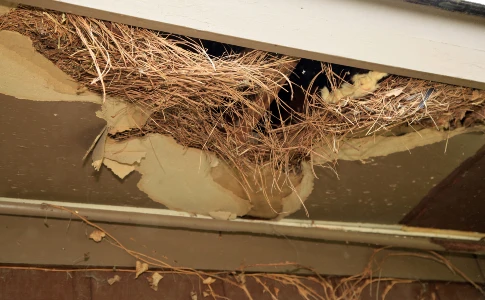
Squirrel nest at entry hole on a home

Understanding Squirrels in Georgia


Eastern gray squirrels and flying squirrels commonly invade attics and soffits across Marietta and Metro Atlanta. They enter to nest, shelter, and raise young, often chewing through wood and gaps to reach attic spaces.

Risks: chewed wiring (fire hazard), contaminated insulation, noise, and ongoing structural damage. Control is most effective when focused on exclusion + humane removal.

Why Squirrels Invade & Where They Get In


Squirrels prefer warm, protected spaces and will exploit small openings. Typical entry points include:

  • Roof gaps along fascia/soffits and construction gaps
  • Roof & gable vents with damaged or missing screens
  • Chimney caps that are loose or missing
  • Chewed corners at dormers, eaves, and siding transitions

Once established, squirrels enlarge holes, build nests, and may return season after season without proper exclusion.

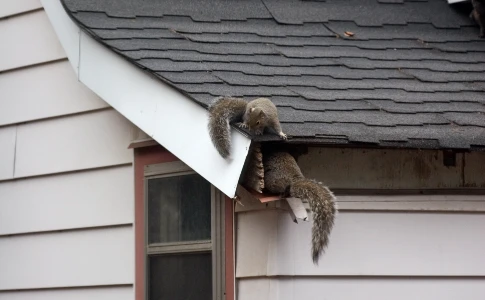
Squirrels entering a roof gap

The Challenge: Why Indoor-Only Treatments Don’t Work


Repellents and sprays inside the attic provide limited relief and do not solve the root cause—openings that allow access. Successful control requires humane removal and professional exclusion to prevent re-entry.

Best immediate steps: Avoid sealing holes until animals are out; seal after removal to keep squirrels from being trapped inside walls/attics.

Active squirrel hole in a roof edge

Prevention: The Only Reliable Solution Year-Round Exclusion


Our wildlife program focuses on remove → seal → protect:

  • Humane removal: Live trapping and one-way doors to vacate animals safely.
  • Full exclusion: Seal/repair all active and potential entry points (construction gaps, vents, eaves).
  • Durable materials: Ridge/soffit vent guards, heavy wire mesh, sealants, sheet metal, and chimney caps.
  • Attic remediation: Replace contaminated insulation if needed and sanitize affected areas.

The Dixie Exterminators Approach


Wildlife services tailored to Georgia homes—fast, humane, and built to last.

  • Inspection & mapping of all entry points and travel routes
  • Humane eviction (live traps / one-way devices)
  • Comprehensive sealing of gaps at eaves, fascia, and vents
  • Roofline & vent protection to stop future gnaw-ins
  • Warranty with return visits if activity reoccurs

Local expertise since 1963 serving Marietta & Metro Atlanta.

Technician inspecting home exterior entry points
Chewed hole on fascia showing squirrel nest site

Additional Prevention Tips for Homeowners


  • Trim branches at least 6 ft from rooflines; reduce “launch points.”
  • Repair/upgrade screens on roof, gable, and attic vents.
  • Secure chimney caps and install vent guards.
  • Eliminate attractants: feed pets indoors, secure garbage, clean grills.
  • Harden structures: sheet metal or heavy mesh on recurrent chew sites.

These steps dramatically reduce new attempts while our professional exclusion keeps squirrels out for good.

Squirrel Species You May See in Georgia


Eastern gray squirrels: most common attic intruder; active by day; strong gnawers.

Southern flying squirrels: small, nocturnal, enter via tiny gaps; noises often at night.

Fox squirrels: larger, less common in attics but can damage roof edges and soffits.

Our focus is humane removal and exclusion that protects your home long-term.

Squiirel

Seasonal Squirrel Activity in Georgia


Winter–Early Spring: Seek warm attics to nest; frequent gnawing/noise.

Spring–Summer: Breeding & juvenile dispersal; new entry points often appear.

Fall: Increased roofline activity as squirrels cache food and seek shelter.

Best prevention windows: late summer (before fall pressure) and late winter (before spring litters).

squirrel

Why Professional Exclusion
Beats DIY


  • Humane methods: Proper one-way doors and live traps prevent harm and avoid trapping young inside.
  • Find every gap: Pros identify primary & secondary entries and seal them correctly.
  • Right materials: Wildlife-grade mesh, sheet metal, and vent guards outlast foam-only patches.
  • Warranty & follow-up: Continued protection and return visits if activity resumes.

Get lasting results with professional removal and full exclusion.

Squirrel Removal for
Marietta & Metro Atlanta


Dixie Exterminators provides humane squirrel removal and exclusion throughout Marietta and Metro Atlanta, including:

Cobb County: Acworth • Austell • Kennesaw • Mableton • Marietta • Powder Springs • Smyrna

North Fulton County: Alpharetta • Johns Creek • Roswell • Sandy Springs

Cherokee County: Canton • Holly Springs • Woodstock

Douglas County: Douglasville • Villa Rica

Fulton County: Atlanta • Dunwoody • Vinings

Paulding County: Dallas • Hiram

Forsyth County: Cumming

Our wildlife team understands North Georgia’s seasonal pressures and delivers custom, long-term protection.

Atlanta, Georgia skyline in the morning at sunrise

Get Started with Guaranteed Exclusion


We remove squirrels humanely, seal every entry, and protect your home with durable, wildlife-grade repairs. If activity returns, we return.

Fast scheduling • Humane methods • Roofline & vent protection • Attic remediation available

Call (770) 424-1300 or request service online today.

Squirrel Removal & Control
Questions & Answers


1. Why do squirrels enter homes in Metro Atlanta?
Squirrels invade attics and rooflines seeking warmth, shelter, and safe nesting sites. Mature oaks and pines give easy rooftop access; roof gaps, gable vents, and construction seams are common entry points. Tree limbs within six feet act as bridges. Once inside, squirrels shred insulation, may chew wiring or wood, and mark territory with scent, attracting more activity over time.

2. What types of squirrels invade homes in Georgia?
Two species cause most household problems in North Georgia:
  • Eastern Gray Squirrels (Sciurus carolinensis) – 16–21 in, 1–1.5 lb, active by day; heavy running/chattering 6–9 a.m. and 3–6 p.m.
  • Southern Flying Squirrels (Glaucomys volans) – 8–10 in, 2–3 oz, strictly nocturnal; live in colonies of 4–8 with light scurrying/chirping at night.

Both species chew wood and wiring, contaminate insulation, and introduce fleas and mites. Professional inspection identifies species and determines the correct trapping and exclusion strategy.

3. How do squirrels get into attics?
They exploit small vulnerabilities: roof and gable vents, fascia boards, soffit gaps, construction joints, storm damage, or weak siding. They can chew through 1/8-inch plastic and even solid wood. Entry holes are typically 2–4 inches wide with gnawed edges. A typical Metro Atlanta home has 8–15 potential entry points; missing even one ensures repeat problems.

4. What damage do squirrels cause inside attics?
Significant structural and electrical damage:
  • Shredding/contaminating insulation (each adult produces 20–30 droppings/day)
  • Chewing electrical wires (fire hazards)
  • Damaging HVAC ducts (can reduce efficiency by 20–40%)
  • Gnawing rafters, roof decking, PVC

Urine/droppings cause strong ammonia odors; parasites can migrate into living spaces. Early intervention prevents escalating repair costs.

5. When do squirrels have babies in Georgia?
  • Gray Squirrels: Breed Dec–Feb (births Feb–Mar) and May–Jul (births Jun–Jul); litters 2–5.
  • Flying Squirrels: Breed Feb–Mar (births Mar–Apr); litters 2–5.

Young reach independence at 10–14 weeks. Georgia law prohibits sealing structures when dependent young are present. Optimal exclusion windows: April–May and August–November. Professional inspections determine juvenile presence before exclusion.

6. How does Dixie Exterminators remove squirrels?
We follow a proven three-step process:
  • Inspection – Identify species, entry points, nesting activity.
  • Removal – Humane one-way exit devices and/or live traps at entries and travel routes.
  • Exclusion – Permanently seal all openings with chew-resistant materials.

This integrated approach eliminates active squirrels and prevents new ones from entering.

7. What is squirrel exclusion and why is it necessary?
Squirrel exclusion = permanently sealing every active and potential entry. Vacated territories attract other squirrels within days—exclusion is the only long-term solution.
  • Inspect the structure for vulnerabilities.
  • Install one-way exit devices so current squirrels leave safely.
  • Seal all gaps with heavy-gauge steel mesh, sheet metal, sealant, and structural repairs.
8. What materials are used for professional exclusion?
Commercial-grade, durable materials:
  • Galvanized hardware cloth for vents and gaps
  • Sheet metal flashing for corners/chew zones
  • Steel wool + foam for small penetrations
  • High-grade sealants (polyurethane/silicone) for seams
  • Wood replacement where structural damage exists

9. How long does squirrel exclusion take?
Depends on complexity: minor issues may take hours; severe infestations can require multiple visits over 1–3 weeks. Active infestations average 10–14 days from inspection to full sealing, ensuring all animals exit before final closure.

10. Are Dixie’s squirrel control methods humane?
Yes. We operate under GA Department of Agriculture guidelines using humane one-way exit doors and live-trapping. No animal is sealed inside. Trapping alone is temporary—70–80% of properties re-infest within 3–6 months without exclusion.*

11. How much does squirrel removal cost in Metro Atlanta?
Costs vary by severity and structure size. Preventive exclusion is usually the most economical long-term approach.

12. When is the best time for squirrel exclusion in Georgia?

Year-round activity means infestations can start anytime; prompt inspection prevents months of damage. Optimal exclusion: April–May (after winter litters) and August–November (after summer litters). If babies are present (Feb–Mar or Jun–Jul), exclusion is delayed until juveniles are independent (4–8 weeks).

13. What happens after squirrel removal?
We restore sanitary, odor-free conditions and prevent re-entry:
  • Exclusion & Repairs: Seal all entry points.
  • Sanitization: Remove droppings/contaminated insulation, disinfect, neutralize odors.
  • Insulation Replacement: Install clean, energy-efficient insulation if needed.
14. Do squirrels carry diseases?
Yes—potential risks include:
  • Salmonellosis (droppings)
  • Leptospirosis (urine)
  • Tularemia (rare; bites/contaminated dust)

They also harbor fleas, ticks, and mites. Professional decontamination with PPE is recommended; DIY cleanup is unsafe.

15. Are squirrels dangerous?
They rarely act aggressively but may bite if cornered. Greater dangers are indirect: electrical fires from chewed wires, respiratory irritation from droppings, and allergic reactions from dander/parasites. Rodents (including squirrels) are linked to 20–25% of house fires with “unknown electrical cause.”

16. Can I prevent squirrels myself?
DIY helps but rarely suffices:
  • Trim tree branches 6–8 ft from roofs.
  • Remove or squirrel-proof bird feeders.
  • Secure trash and pet food.

DIY often misses small vulnerabilities or uses materials that aren’t chew-resistant. Professionals identify every risk and use commercial-grade barriers with a warranty.

17. What are signs of a squirrel infestation?
  • Early-morning/late-afternoon noises (or nocturnal sounds for flying squirrels)
  • Gnawed wood or wires; debris near vents
  • Droppings in attic corners; strong odors
  • Light penetration through unintended gaps

The sooner you schedule an inspection, the less damage occurs.

18. How fast can squirrels reproduce and spread?
A female gray squirrel can have two litters/year with 2–4 young each. Juveniles mature in ~3 months and often nest nearby. In dense areas like Marietta and Roswell, multiple generations quickly saturate habitats—consistent prevention is essential.

19. Why are squirrel problems increasing in Atlanta?
Rapid development reduces wooded habitats, pushing wildlife into neighborhoods. Attics mimic tree hollows—warm, dry, safe. Abundant bird feeders, gardens, and pet food add attraction. We balance humane wildlife management with long-term exclusion.

20. What makes Dixie Exterminators different from other companies?
  • Founded in 1963 in Marietta; 60+ years of local wildlife expertise
  • Construction + biology knowledge for durable, humane solutions
  • Ongoing technician training and commercial-grade materials
  • Service warranty – if squirrels return, so do we

21. Where does Dixie Exterminators provide squirrel control?
Marietta and Metro Atlanta: Acworth, Alpharetta, Atlanta, Austell, Canton, Cumming, Dallas, Dunwoody, Hiram, Holly Springs, Johns Creek, Kennesaw, Mableton, Powder Springs, Roswell, Sandy Springs, Smyrna, Vinings, and Woodstock.

22. How quickly can Dixie respond to a squirrel problem?
Most calls receive same-week service; urgent attic intrusions are prioritized. Rapid inspection, trapping, and exclusion across Metro Atlanta.

23. Is cleanup and disinfection included?
Yes. After removal and exclusion, we disinfect affected areas to eliminate bacteria/odors and replace contaminated insulation when needed to restore energy efficiency and indoor air quality.

24. What is the long-term benefit of professional exclusion?
Comprehensive exclusion protects your home long-term—no recurring trapping fees, reduced fire risk, healthier indoor environment, and the most cost-effective, permanent protection.

*Source for reinfestation rate (70–80%): Aggregated professional wildlife management data (e.g., NWCOA) and University Extension references (University of Georgia Cooperative Extension; Penn State Extension) report that trapping without structural exclusion leads to reinfestation in 70–80% of properties within 3–6 months.