Quick answer
After squirrels are removed, the home needs a check of entry points and any affected building materials. Final sealing should follow confirmation that animals are out. Cleanup and insulation work depend on the location and extent of damage or contamination; a squirrel visit alone does not establish that the entire attic needs replacement.
The end of the scratching is welcome, but it leaves several practical decisions. Is the opening repaired? Were other gaps checked? Does the nest need removal? Is an insulation estimate for a small affected area or the whole attic?
This guide helps you understand that next stage. Dixie Exterminators provides squirrel exclusion and removal services and can assess entry damage and recommend appropriate cleanup or insulation work for homes in Marietta and Metro Atlanta.
Confirm Removal Before Closing the Final Entry
Ask the wildlife company how it determined that squirrels are out. The answer should reflect the evidence and the removal method, including any concern about young or inaccessible areas. A quiet house is encouraging, but silence alone does not prove every space is empty.
If temporary devices are still installed, leave them in place until the company completes its checks. Tell other contractors that wildlife work is underway so they do not close the planned exit or remove equipment.
If activity continues, contact the removal company before covering openings or adding insulation. New work can conceal evidence or make the remaining animal harder to reach.
If removal has not yet been completed, the squirrel removal process and cost guide explains the earlier stages and what the service scope should include.
What Should Squirrel Exclusion Repairs Include?
Exclusion means making the building inaccessible to the animals being managed. The repair plan should address the opening that was used and other accessible weaknesses identified during inspection.
Ask for photos or a clear description of each location. “Seal the roof” is less useful than knowing which vent, fascia corner, or soffit section will be repaired and whether damaged supporting material is included.
- Roof returns and trim: Check the transitions where roof sections, walls, and fascia meet.
- Soffit panels: Repair loose or damaged sections and evaluate the material supporting the repair.
- Gable and roof vents: Use protection suited to the opening while maintaining the vent’s function.
- Chimney areas: Have caps, flashing, and related defects assessed by the appropriate professional.
- Previous patches: Check for gaps at their edges, loose fasteners, or damage beside the repair.
These locations are an inspection checklist, not proof that every home needs all of them repaired. The estimate should connect each recommendation to an observed condition.
What Makes an Entry Repair Durable?
A repair needs suitable material, secure attachment, and a sound surface beneath it. A cover over decayed trim can fail even if the cover itself resists chewing. The work also needs to shed water and preserve ventilation.
| Condition | Repair consideration | Ask before approval |
|---|---|---|
| Chewed opening in otherwise sound trim | A fitted, securely fastened repair that protects the opening and exposed edges. | What material will be used and how will it attach? |
| Rotten or loose fascia or soffit | Repair or replacement of the failed substrate may be necessary. | Does the scope include the damaged wood beneath the cover? |
| Damaged vent screening | A suitable protective screen or guard with proper fastening. | Will airflow and maintenance access remain adequate? |
| Opening at roofing or flashing | A weather-resistant repair coordinated with the roof assembly. | Is a roofer needed and who confirms the finished work? |
Metal flashing and heavy wire mesh are among the materials used for appropriate exclusion repairs. Selection depends on the opening and construction. Foam or surface caulk alone should not be assumed to provide a complete barrier against a squirrel trying to regain access.
Ask how the repair will look from the ground, whether finishing or painting is included, and how water is directed away from it. A wildlife repair should not create a new moisture problem.
What Damage Needs to Be Checked After Removal?
The inspection should distinguish visible damage from areas that could not be reached. Request photographs when practical, especially before approving work you cannot see from an attic hatch or the ground.
Wiring and electrical components
If chewing or damaged wire insulation is found, have a qualified electrician assess it. Sealing a squirrel opening does not repair an electrical defect. Do not handle exposed wiring or assume a cable is safe because lights still work.
Wood, roofing, and exterior trim
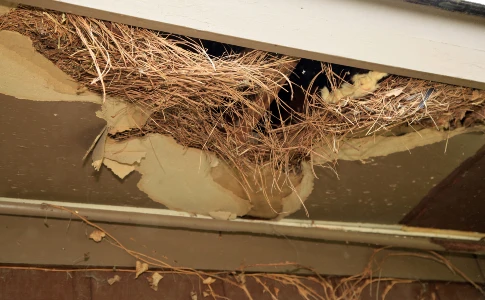
Some damage is limited to a cover or trim board; other conditions may involve the roof assembly or deteriorated wood. Ask whether the repair is included in wildlife service or requires a separate contractor. An inspection should not label a structure unsafe solely because squirrels were present.
Ductwork and stored belongings
Report damaged ducts, disturbed contents, or waste near storage areas. HVAC components and different storage materials may need different assessments. A general odor treatment does not answer whether a damaged duct should be repaired.
Does Every Attic Need Professional Cleanup?
Cleanup recommendations should depend on evidence: where waste or nesting material is located, how extensive it is, which materials are affected, and whether the area can be reached safely.
Ask the company to show the affected area and explain the proposed work. A brief entry through one corner is not automatically the same cleanup project as prolonged nesting across several areas.
CDC advises against dry-sweeping or vacuuming rodent droppings, urine, and nesting material because disturbance can put contaminated particles into the air. Heavy contamination requires additional precautions. Leave these materials undisturbed while the cleanup method and access are assessed.
For attic work, ask how the crew will contain debris, protect the route through your home, handle disposal, and treat suitable surfaces. Cleaning methods must fit the material; spraying a product is not a substitute for removing contaminated material that needs removal.
Persistent odor also needs investigation. Waste, a concealed animal, moisture, and other conditions may require different responses. Ask what is causing the odor before approving deodorization alone.
When Does Insulation Need Replacement?
Insulation should be evaluated for contamination and physical damage. The recommendation should specify the affected area and explain whether local removal or a broader replacement is warranted.
Useful questions include:
- Where is the contamination or damage, and can you show me photos?
- Is the issue limited to a nest area or present in several parts of the attic?
- What material will be removed, and what will be retained?
- Will the area be checked for moisture or other unresolved defects before replacement?
- What replacement product and installed coverage are included?
- Are disposal, access protection, and final photographs part of the estimate?
Do not bury contaminated nesting material under a new layer of insulation. The removal and cleanup scope should be settled first. At the same time, the presence of squirrels does not justify replacing unaffected material without an explanation.
Dixie’s insulation service information is a useful next step when an inspection identifies a need. Confirm the specific work and specifications in the proposal for your home.
How Can You Reduce the Chance of Squirrels Returning?
Once the building is secured, prevention becomes a maintenance task. The goal is to keep usable openings from developing and reduce easy access to vulnerable areas.
- Manage roof access. Have appropriate tree branches or climbing vegetation evaluated for trimming. Use a qualified tree professional where height or utilities are involved.
- Maintain exterior materials. Repair loose trim, damaged vent protection, and visible deterioration before openings grow.
- Manage attractants. Keep stored birdseed and pet food contained, clean up spilled seed, and evaluate feeder placement near the house.
- Inspect after building work. Ask roofers, gutter installers, and other contractors to preserve existing exclusion measures and report new gaps.
- Check from the ground after storms. Look for displaced panels or visible damage without climbing to inspect it yourself.
UGA Extension notes that squirrels may find another route even when one path to a roof is removed. Tree trimming supports prevention, but the condition of the house still matters.
For Metro Atlanta homes with mature trees, dormers, and additions, make roof transitions part of regular exterior maintenance. Keep a record of repaired locations so another contractor knows what to preserve.
What if You Hear Scratching Again?
Record the time, location, and any visible outside activity, then contact the company that performed the work. Do not assume that the original repair failed or that the sound is definitely another squirrel.
The follow-up should consider fresh entry, a new opening, remaining activity, and other animals or building noises. Your work records and completion photos help compare the current conditions with what was repaired.
If an animal is in an occupied room or appears confined in a wall, use the immediate steps in our guide to squirrels inside the house and describe the situation clearly when calling.
What Should You Receive When the Job Is Finished?
- A description or photos of the entry repairs completed.
- Confirmation that temporary removal equipment has been removed when appropriate.
- A record of cleanup or insulation work performed and any remaining recommendations.
- Identification of concealed areas or other limits of the inspection.
- Any applicable written warranty, exclusions, and maintenance requirements.
- A contact method and instructions for reporting new activity.
Frequently Asked Questions
Can a roofer seal a squirrel hole?
A roofer may be appropriate for roof repairs, but closure should be coordinated with the wildlife removal plan. Confirm that animals and any young are out before the final entry is sealed.
Does squirrel exclusion make the house pest-proof?
No repair should be treated as protection against every pest in every part of a house. Ask which animals, openings, and areas the work addresses and what future maintenance is needed.
Should I replace all my insulation just because squirrels were present?
The recommendation should follow an inspection of actual contamination, damage, and access. Ask why localized removal would or would not be sufficient before approving whole-attic replacement.
Should I remove an old nest before the technician arrives?
Leave it undisturbed until the technician checks whether it is occupied and evaluates the material around it. Tell the company where you found it without moving or handling it.
Is it normal to see squirrels in the yard after exclusion?
Yes. Exclusion addresses access to the building; it does not remove all squirrels from the neighborhood. Report repeated use of a building opening or fresh damage rather than ordinary outdoor sightings.
Complete the Repairs That Your Home Actually Needs
Dixie Exterminators can assess squirrel entry damage, exclusion needs, and cleanup or insulation concerns around your Marietta or Metro Atlanta home. Request an inspection or discuss follow-up work so the next steps are tied to documented conditions.
Authoritative Resources
Sources for wildlife guidance and the precautions discussed in this guide: