Quick answer
Professional squirrel removal starts with an inspection and a plan for the animals, the entry points, and any nesting young. Depending on the property, removal may involve trapping or a suitable one-way exit, followed by monitoring and final sealing. The time and cost depend on access, activity, repair needs, and the work included in the quote.
When squirrels are living in your house, hiring help raises practical questions: Will someone go into the attic? Are traps necessary? How will the company know the squirrels are gone? What repairs are included?
This guide explains the decisions behind the work so you can compare an estimate and understand the sequence. Dixie Exterminators provides squirrel removal and exclusion in Marietta and Metro Atlanta, with methods selected around the building and the activity found during inspection.
What Happens During Professional Squirrel Removal?
1. Inspect the activity and the building
The initial visit should connect the evidence inside with the openings outside. Attics, rooflines, soffits, fascia, vents, and other accessible areas may be examined. The technician should also ask about recent repairs and any traps or patches already used.
Identification matters. Sounds alone do not establish whether the animal is a squirrel, and the number you have seen outdoors does not establish the number inside. Tell the technician if you suspect a nest or if movement is concentrated in an inaccessible wall.
2. Explain the scope and choose a removal method
A useful plan identifies the active opening, additional vulnerable areas, and the route the animals are expected to use. It should explain why the proposed method fits the property and what would cause the plan to change.
For example, a device installed over a sound roof opening presents a different job from a deteriorated roof edge with several potential access routes. The quote should make that difference understandable.
3. Carry out removal and monitor activity
The company may use trapping, an appropriate one-way device, or a combination based on its inspection. Monitoring is part of the work. Ask who checks equipment, how often follow-up is expected, and what you should report between visits.
Do not move a device, add your own trap, or close a nearby gap while the plan is underway. A change made between visits can interfere with the intended route or make activity harder to interpret.
4. Check departure before final closure
The technician should evaluate whether activity has ended and whether dependent young or inaccessible areas require further attention. A single quiet afternoon or a single capture should not be the only basis for closing the final opening.
5. Finish the agreed repairs and review remaining needs
Final exclusion closes the usable entry routes with suitable materials. The completion discussion should also distinguish the work performed from any separate cleanup, insulation, roofing, electrical, or other repairs still recommended.
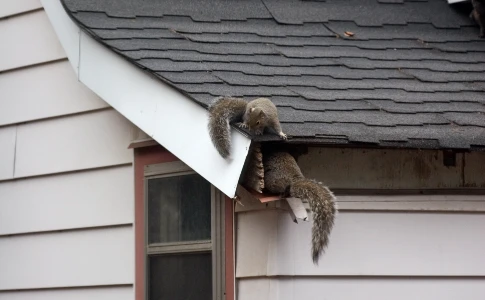
Trapping or a One-Way Door: Which Approach Is Appropriate?
A one-way door lets an animal leave through a controlled opening while restricting return. A trap captures an animal for handling by the operator. Neither choice should be made without evaluating the site.
| Approach | What it addresses | Question to ask |
|---|---|---|
| Professional trapping | Capturing animals using the identified route or area. | Who monitors traps and handles captured animals? |
| One-way exclusion | Allowing outward movement through a managed exit. | Have young and alternate entry routes been evaluated? |
| Direct access to an enclosed space | An animal or nest that cannot be reached through the usual route. | Is an access opening needed, and who restores the surface afterward? |
| Final structural exclusion | Closing access after removal is verified. | Which openings and materials are included in the repair scope? |
Georgia DNR provides information about nuisance wildlife control operators and permitting. Ask the company about the authorization relevant to its work and what happens to captured animals. Do not assume that a homeowner can trap a squirrel and release it wherever they choose.
What Changes if There Are Baby Squirrels?
Dependent young can change both the method and the schedule. An exit that works for an adult does not ensure that young in a nest can leave. Excluding a mother without addressing the nest can leave animals inside and create additional problems.
Ask how the company checks for young and how that finding changes its plan. Depending on the circumstances, the operator may need access to the nest, a different work sequence, or guidance from a permitted wildlife rehabilitator.
Do not take young squirrels into your care or move a nest yourself. Georgia DNR directs people with wildlife care questions to permitted rehabilitators. The relevant decision is the animals’ actual condition and location, not an assumption based only on the month.
How Long Does Squirrel Removal Take?
There is a difference between the time spent at your house and the elapsed time needed to finish the job. Inspection and equipment installation may happen during a visit, while monitoring, follow-up, final sealing, and additional repair work happen separately.
There is no dependable completion promise that fits every house. Ask for an initial schedule after inspection and the conditions that could extend it.
- Evidence of continuing activity: New observations may require another visit or a revised approach.
- Young in a nest: The work sequence must account for animals that cannot use an exit independently.
- Height and access: Tall roofs, steep slopes, enclosed cavities, or limited attic access affect the work.
- Condition of the structure: A damaged or decayed area may need repair before a durable closure is possible.
- Weather and scheduling: Exterior conditions can affect roof work and the availability of follow-up visits.
Before work begins, ask: “What needs to be true before you consider removal complete?” That answer is more useful than a date unsupported by an inspection.
How Much Does Squirrel Removal Cost?
An accurate price requires a defined scope. A quote for capturing an animal is not necessarily a quote for sealing the house, repairing damaged trim, removing contaminated insulation, and returning for follow-up.
Dixie’s estimate should be based on the conditions found at your property. This guide does not list a dollar range because it would not establish what your home needs or what the quoted service includes.
| Quote component | What to clarify |
|---|---|
| Inspection and removal | Whether inspection, setup, animal handling, and equipment removal are included. |
| Monitoring and return visits | Which visits are included and how additional work is approved. |
| Entry sealing | The specific openings covered and the materials proposed. |
| Building repairs | Whether damaged trim, roofing, screens, or other materials require a separate scope. |
| Cleanup and insulation | The affected area, removal and disposal work, and any replacement materials. |
| Follow-up protection | Any written warranty, its term, covered areas, exclusions, and maintenance conditions. |
When comparing companies, ask both to describe the work in writing. A lower total may reflect a smaller scope; a larger scope should still be justified by the inspection. Obtain approval terms for unexpected damage or additional openings discovered after work begins.
What if the Attic or Wall Is Difficult to Reach?
Limited access should be discussed before work starts. A finished attic, sealed roof cavity, high dormer, or wall void can affect where equipment is placed and whether additional inspection or access is needed.
Ask the company to distinguish what it has inspected from what remains concealed. If a new access opening is proposed, confirm its location, purpose, and who is responsible for drywall, trim, paint, or other restoration.
If you are still trying to understand where the squirrels are entering, start with squirrels inside the house and immediate next steps.
Can Repellents, Lights, or Noise Replace Removal?
These approaches do not repair an opening or establish that a nest is empty. Even if activity changes temporarily, the building may remain accessible. A treatment that seems to quiet one area can leave you uncertain about what happened elsewhere.
Do not scatter mothballs in an attic. The National Pesticide Information Center explains that mothballs are pesticides with specific labeled uses, typically in tightly closed containers, and that misuse can expose people and pets to vapors.
Ask for the plan that addresses the animal and the building. Our guide to squirrel exclusion repairs and cleanup explains the work that may follow removal.
How Should You Prepare for the Visit?
- Share activity notes, ground-level photos, and previous wildlife invoices if available.
- Explain any do-it-yourself trapping, repellents, or patching already attempted.
- Make the area beneath the attic hatch accessible without entering the affected space.
- Secure pets and tell the technician about occupied rooms near the activity.
- Ask how you will receive updates and whom to contact if activity changes.
Frequently Asked Questions
Do I need to know how many squirrels are inside before calling?
No. Describe what you have observed, including the location and frequency of activity. The inspection and monitoring plan should address the uncertainty rather than rely on your initial count.
Does routine pest control include squirrel removal?
Do not assume it does. Wildlife removal and structural exclusion can require a separate inspection and service scope. Ask Dixie to confirm what is included in your current agreement.
Do I have to leave home during the work?
Ask the company when the method and scope are known. Access restrictions depend on where equipment, removal, repairs, or cleanup will occur. Keep people and pets clear of the work area as instructed.
Is attic cleanup automatically included in a removal quote?
Not necessarily. Ask whether waste removal, disinfection, insulation work, and disposal are included or separately priced. The estimate should identify the areas involved.
What should I do if I hear activity between visits?
Record the time and location and contact the company handling the work. Do not move equipment or seal openings yourself; those changes can interfere with the removal plan.
Ask for a Squirrel Removal Plan Built Around Your House
Dixie Exterminators can inspect squirrel activity and entry points in Marietta and surrounding Metro Atlanta communities. Request an assessment so the proposed removal method, follow-up, repairs, and estimate reflect your property.
Authoritative Resources
Sources for wildlife guidance and the precautions discussed in this guide: